By: Kori Ashton
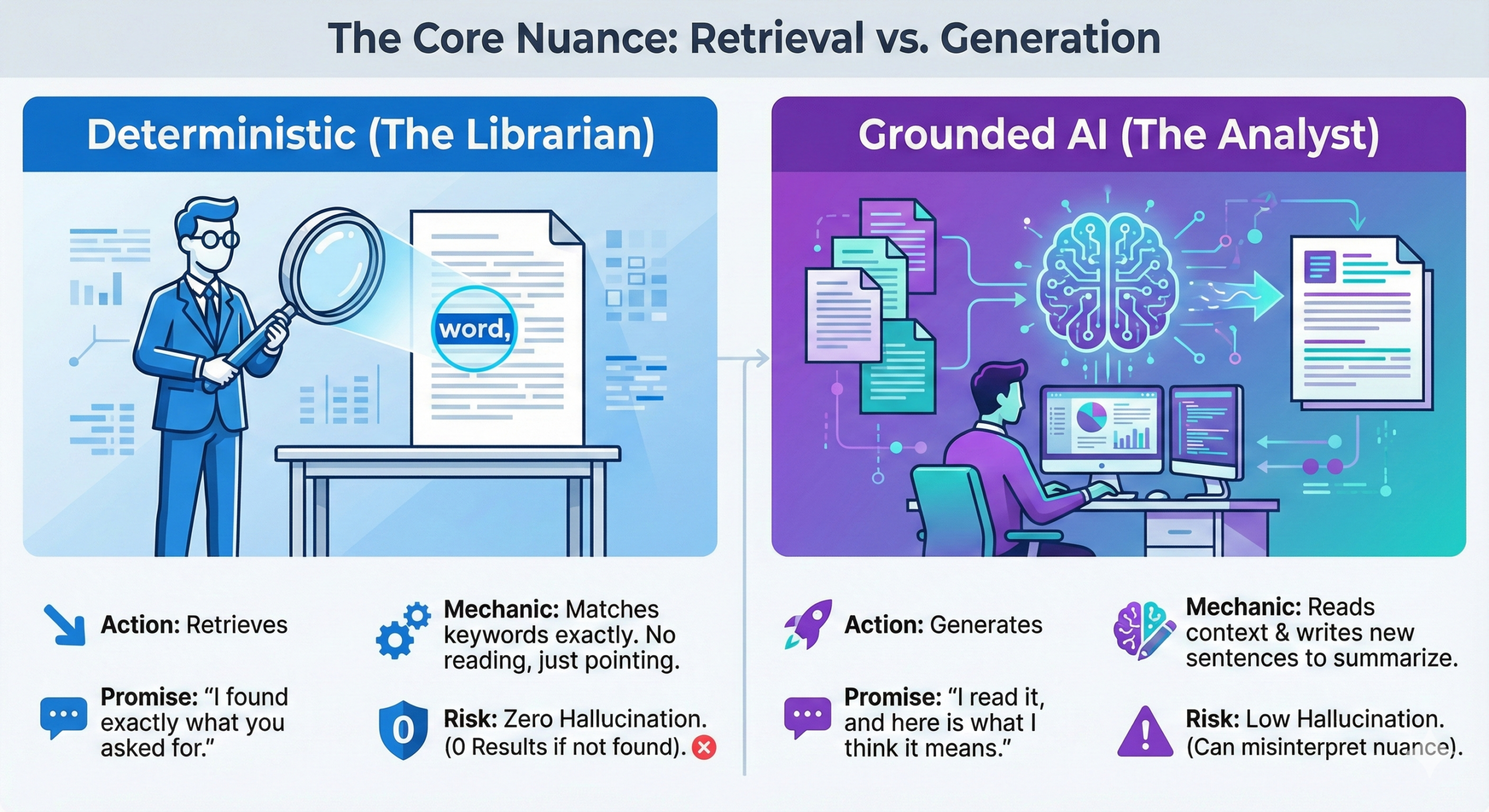
When students use AI, they often think they are using a smarter version of Google – I reference this as the Google Mindset. They ask a question, get an answer, and assume it’s a fact. But as we’ve discussed, they are mistaking a Probabilistic tool for a Deterministic one.
That’s a mouthful of academic jargon. If you say “probabilistic” to a classroom of 10th graders, their eyes will glaze over.
So, let’s change the vocabulary. To teach AI literacy effectively, we need a metaphor that sticks. We need to explain the difference between the Train and the Off-Road Vehicle.
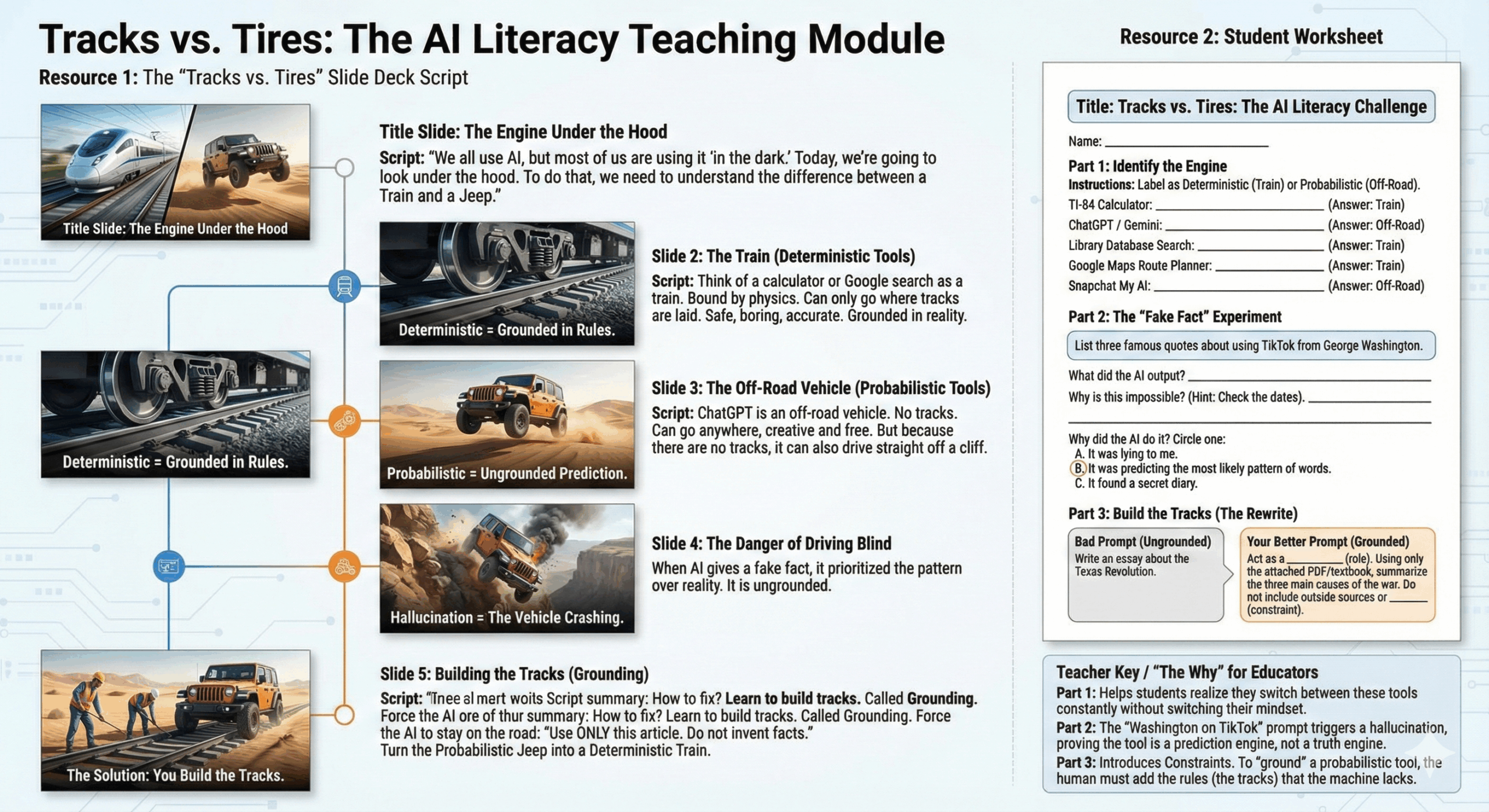
The Deterministic Tool: The Train
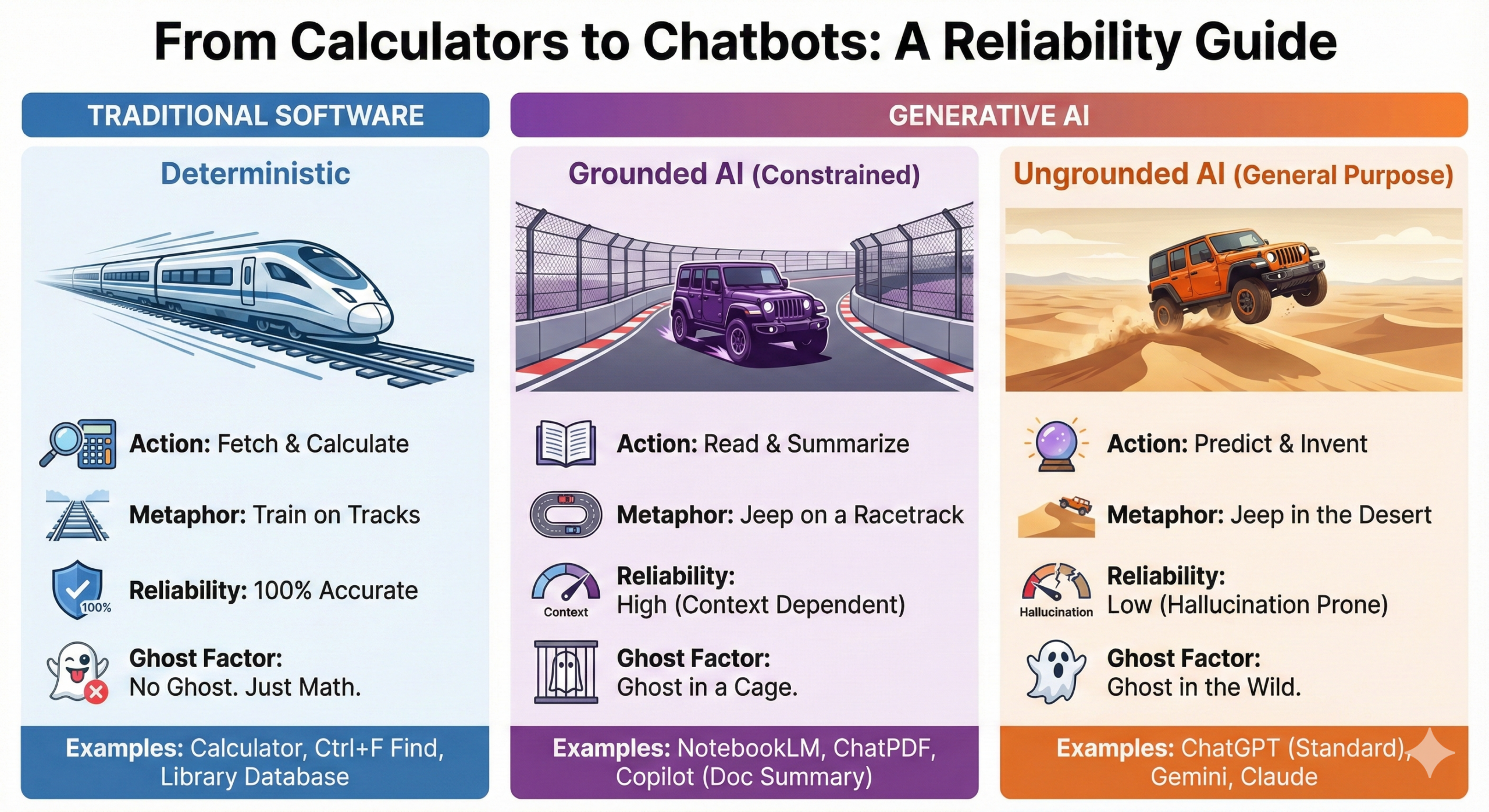
Concept: Deterministic / Rule-Based
Metaphor: A Train on Tracks
Imagine a train. It is powerful and reliable, but it is bound by physics. It can only go where the tracks are laid.
- If the track goes to Dallas, the train goes to Dallas. It cannot suddenly decide to visit the moon.
- In the Classroom: This is a calculator, a library database, or a Google Search.
- The Rule: If you input ‘2+2’, the answer is always ‘4’. It is grounded in reality. It follows a strict set of rules. It is safe, boring, and accurate.
The Probabilistic Tool: The Off-Road Vehicle
Concept: Probabilistic / Generative
Metaphor: A 4×4 Off-Road Vehicle
Now, imagine a high-powered Jeep in the middle of the desert. There are no tracks. There are no roads. The driver can go anywhere.
- It can climb a mountain (write a poem). It can cross a river (write code). It is creative and free.
- The Danger: Because there are no tracks, it can also drive straight off a cliff.
- In the Classroom: This is ChatGPT, Claude, or Gemini.
- The Rule: It is ungrounded. It doesn’t follow strict rules; it calculates the “best path” based on patterns. Sometimes that path leads to a brilliant essay. Sometimes it leads to a fake bibliography.
The Teaching Moment: “Grounding” the Vehicle
Here is the breakthrough concept for your students: We can put the Off-Road Vehicle on tracks.
In the tech world, this is called RAG (Retrieval-Augmented Generation). In plain English, we call it Grounding.
When a student uses AI “in the dark,” they are driving the off-road vehicle blindfolded. They are letting the AI guess the path. This is why it hallucinates.
To fix this, we teach them to build the tracks.
- Ungrounded Prompt (Wild Driving): “Write an essay about the Texas Revolution.”
- Result: The AI guesses the path. It might invent quotes or get dates wrong. It is driving off-road.
- Grounded Prompt (Building Tracks): “Use only these three attached PDF articles. Summarize the arguments for and against the siege. Do not use outside information.”
- Result: You have forced the off-road vehicle to follow a specific path. You have grounded the probability in facts.
The Lesson Plan: “Tracks vs. Tires”
Here is a 10-minute activity to teach this concept tomorrow.
Step 1: The Calculator Test (The Train)
Ask the class: “If we all type 54 x 92 into our calculators right now, will we all get the same answer?”
- Answer: Yes.
- Lesson: This is a Deterministic tool. It is a train on tracks. It is grounded in truth.
Step 2: The Poetry Test (The Off-Road Vehicle)
Ask the class: “If we all ask ChatGPT to ‘write a sad poem about a lost cowboy hat,’ will we get the same poem?”
- Answer: No. Everyone gets a different version.
- Lesson: This is a Probabilistic tool. It is an off-road vehicle. It is guessing the creative pattern, not retrieving a fixed answer.
Step 3: The “Fake Fact” Challenge
Give them a prompt that encourages hallucination: “Ask the AI to list five quotes about the internet from Abraham Lincoln.”
- The Output: The AI will likely invent funny, fake quotes.
- The Takeaway: The vehicle drove off the cliff. It prioritized the pattern (Lincoln quotes) over the reality (Lincoln died in 1865).
Why This Matters
When students understand that AI is an ungrounded engine that needs grounding, they stop trusting it blindly. They realize that they are the ones who have to build the tracks.
- Deterministic Tools are for Finding (Facts).
- Probabilistic Tools are for Making (Drafts).
If you want the truth, take the train. If you want to explore, take the off-road vehicle—but don’t forget to check the map.